

In today’s article, I will share with you the steps used to analyse the chart patterns. With these steps, junior traders will soon be able to analyse the patterns in their real-life trading.
3 main components of the chart patterns
Head and shoulders,triangles, wedges or any other patterns all consist of the same three components. If you know how to read these three components, you can make better trading decisions.
1. The foundation: Highs and lows
Although it may sound easy, it is, in fact, the basis of any analytical chart pattern. The Dow Theory which has been in use for decades is based on the high and low analysis.
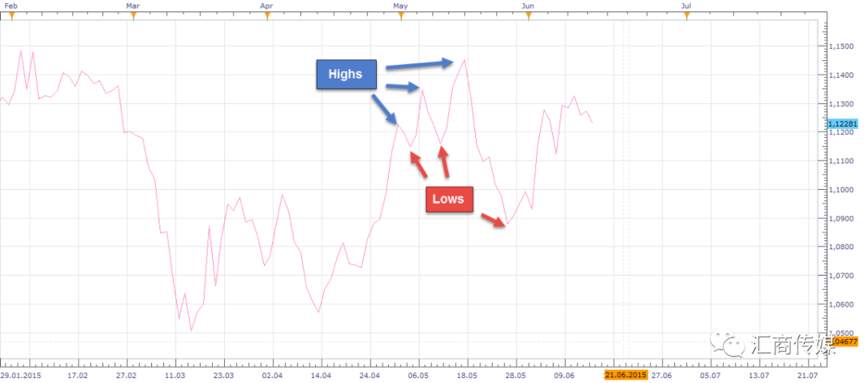
Uptrend: Higher highs, higher lows.
Only with higher highs and higher lows can we say that an uptrend is shaping. Higher highs tell us that buyers (bulls) have the ability to push prices up, while higher lows mean that sellers (bears) cannot gain control during the correction.
Trend reversal
If attempts to make new highs fail, then a trend reversal may be on the way. This also means that the balance of power between the buyers and the sellers is shifting.
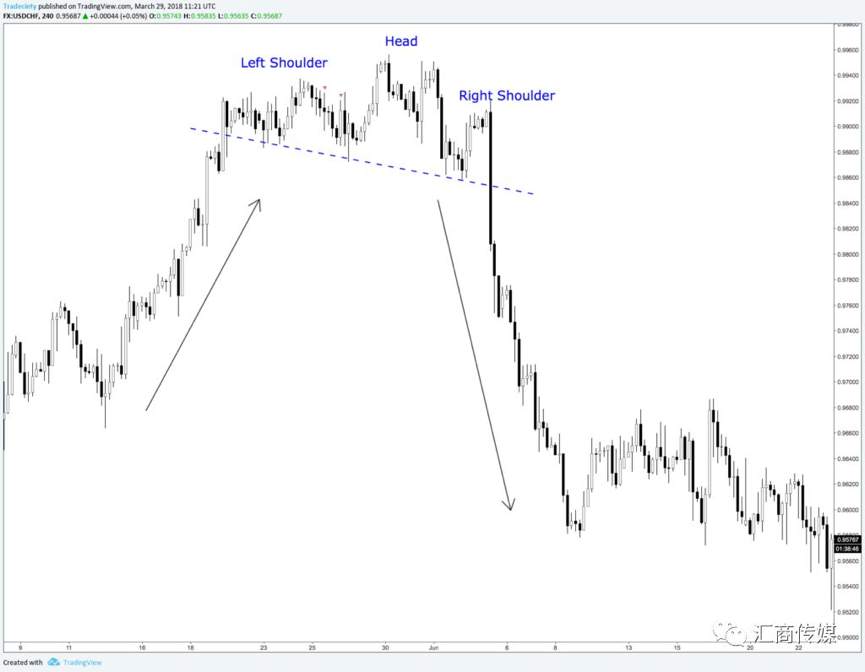
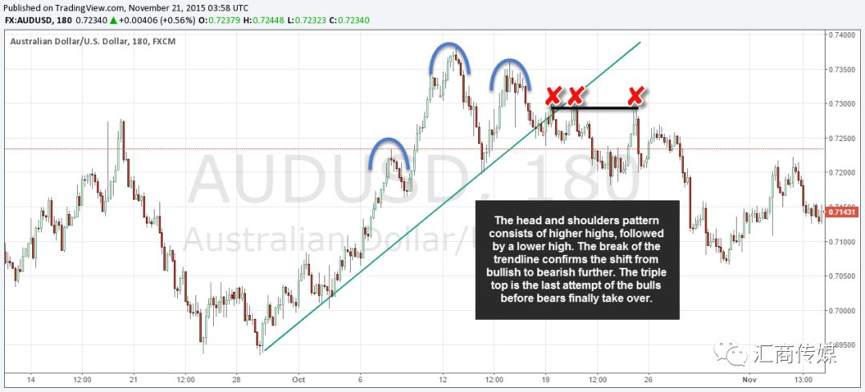
In the chart below we can see a head and shoulders pattern. From the left shoulder to the head, there are only a few new highs, which indicates that the buyer's are running out of steam. The right shoulder further confirms the situation and touches a lower low, which means that the sellers are getting stronger.
2. Trend strength: Length and steepness of the trend-waves
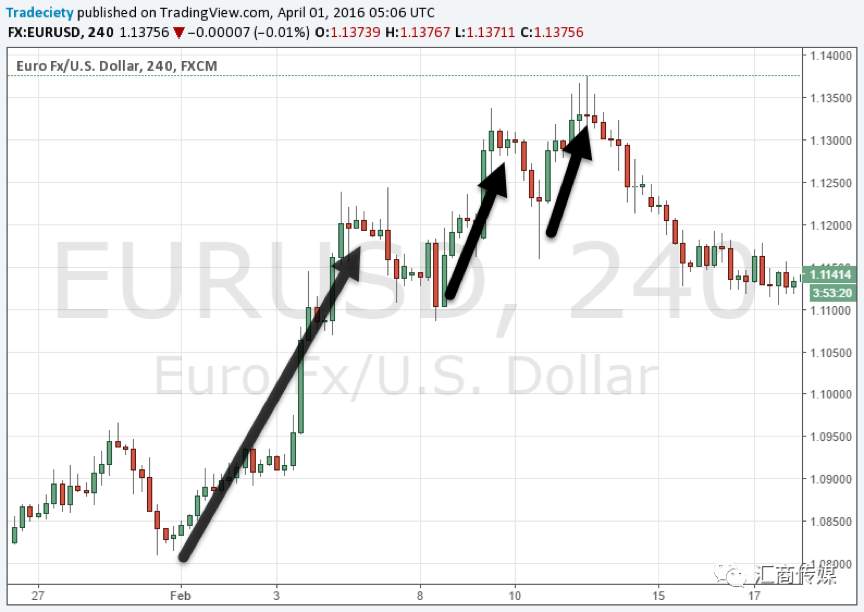
The highs and lows in individual trend waves define the trend strength. In particular, the length and the steepness of the trend waves can help us identify the trend strength.
Many traditional chart analysis focuses only on highs and lows, but in fact what happens between the highs and lows is also important.
For example, the first trend wave (as indicated by the leftmost arrow) on the chart below is very steep and very long. The second wave is less steep and shorter. The third one is even shorter. Its high is just a little bit higher than the previous one. In addition, the price wicks are growing longer, indicating that the trend is exhausted.
3. Trend strength: Pullback depth
When trend is there on the market, the pullbacks in between may also contain valuable information.
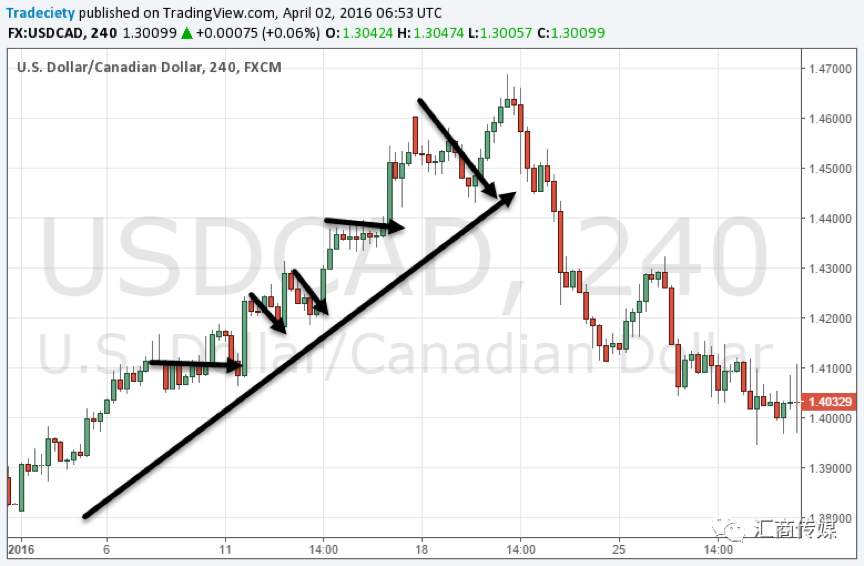
Let’s look at the chart below, It shows an upward trend that has various consolidations and retracements. But the final retracement before the reversal is the largest, and the last arrow is obviously steeper and lasts longer. It tells us that buyer-seller balance is shifting.
Short and flat retracements signals an ongoing trend, only more frequent and larger ones can foreshadow a probable trend shift.
Get to know the 4 most effective chart patterns
Chart patterns are not always as clear as the theoretical examples. In real-life trading one can meet many variations of the standard patterns. Here I will introduce to you four most popular chart patterns.
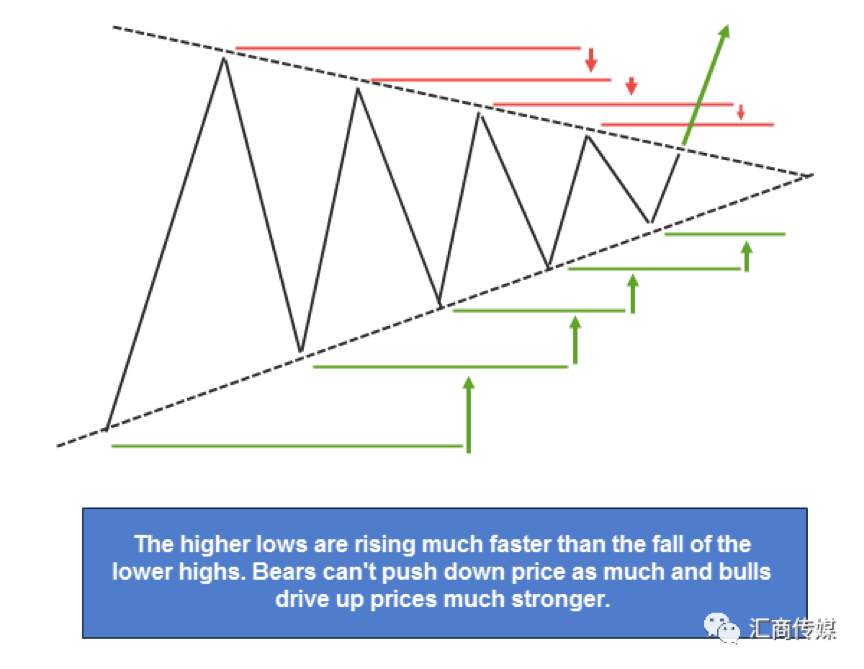
1. Triangles
A triangle signalizes a consolidation period of a trend or the start of a new one. In an upward trend, a triangle appears when pullbacks become smaller. During already established trends, triangles are reliable.
2. Head and shoulders
The head and shoulders pattern signals a possible reversal. In the chart below, price makes its higher high from the left shoulder to the head. Then from the head to the right shoulder price fails to make a higher high, which indicates that the trend is ending. The neckline break leads to a lower low, confirming the reversal of the trend.
3. Double Top/Bottom
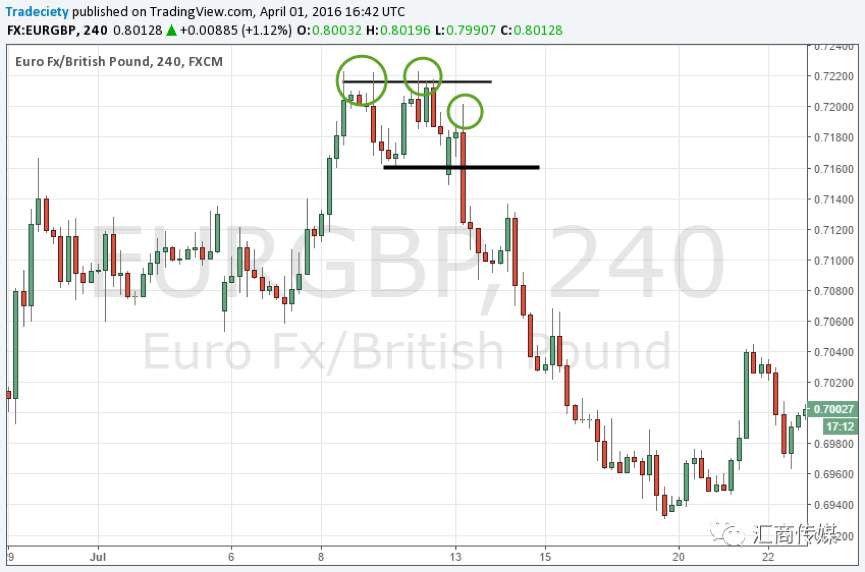
Double top and double bottom are also reversal chart patterns, and their underlying principles are similar to the head and shoulders pattern. The second top fails to break the first high. It tells us that the buyers on the market can’t push the price higher any more. So, the double top or the double bottom patterns are signals of upcoming trend reversal. The confirmation for this reversal can be the emergence of new lows following the double tops.
4. cup with handle
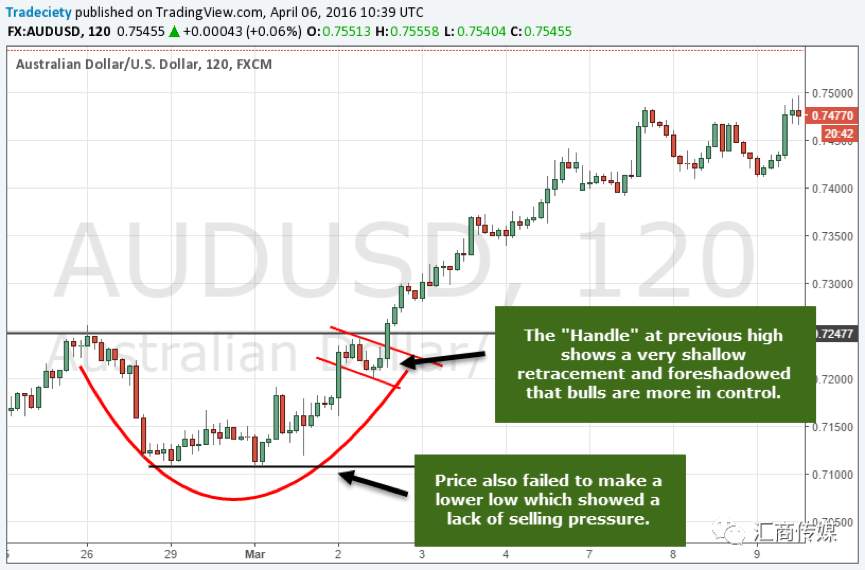
The cup with handle pattern consists of a series of highs and lows. In the below chart, the formation is a shift of a downtrend to an uptrend. There is a row of lower lows at first, then a consolidation at the cup bottom takes place, after this higher highs begin to appear. An upward trend is confirmed when the top of the cup is broken. If the price can’t break the previous highs, then this pattern can transform into a double top.
Conclusion: Understand what the market is telling you
In short, by analyzing the highs and lows, the steepness and length of the trend waves, and the pullback depth, you can read the primary chart patterns. The knowledge points in this article can help you judge whether a chart pattern indicates a good chance to trade, and improve your ability to read the charts.
คำชี้แจง (Disclaimer) : เนื้อหาข้างต้นเป็นเพียงมุมมองของผู้เขียนแต่เพียงผู้เดียว และไม่ได้แสดงหรือสะท้อนถึงจุดยืนอย่างเป็นทางการของ Followme แต่อย่างใด Followme ไม่รับผิดชอบต่อความถูกต้อง ความครบถ้วน หรือความน่าเชื่อถือของข้อมูลที่ปรากฏ และจะไม่รับผิดชอบต่อการดำเนินการใด ๆ ที่เกิดขึ้นจากเนื้อหานั้น เว้นแต่จะมีการระบุไว้เป็นลายลักษณ์อักษรอย่างชัดเจน

เขียนข้อความของคุณตอนนี้