

The May jobs report is expected to show another historic number of non-farm payroll losses alongside a surge in the unemployment rate to the highest level since the 1930s, extending the virus-related labor market devastation of the past few months.
The Labor Department’s report is slated for release Friday at 8:30 a.m. ET. Here were the main results expected from the report, compared to Bloomberg consensus data as of Thursday morning:
Change in non-farm payrolls: -8 million vs. -20.537 million in April
Unemployment rate: 19.5% vs. 14.7% in April
Average hourly earnings month on month: +1.0% vs. +4.7% in April
Average hourly earnings year on year: +8.5% vs. +7.9% in April
The Labor Department’s surveys capture the period including the 12th of the month, meaning the May report will include only the very early stages of reopening in some parts of the U.S. amid the coronavirus outbreak.
But the impacts from the pandemic likely remained profound in May. The May unemployment rate is expected to have jumped to a record 19.5% from 14.7%, the highest in the Bureau of Labor Statistics’ (BLS) monthly data spanning back to 1948. A near-20% unemployment rate would be topped only by that during the Great Depression, when the unemployment rate was estimated to have been peaked at 25%.
The May survey will also provide more clarity on whether disruptions induced by the pandemic translated into permanent job losses, as opposed to temporary furloughs due to pauses in business activity. The BLS conceded in the April jobs report that the unemployment rate “would have been almost 5 percentage points higher than reported (on a not seasonally adjusted basis),” if workers who were classified as “employed but absent from work due to ‘other reasons’” were included in the unemployment rate count as unemployed on temporary layoff.
“One metric we will be watching closely is the reason given for unemployment,” Sam Bullard, senior economist for Wells Fargo Securities, wrote in a note. “The current recession has been marked by an outsized increase in individuals citing ‘temporary layoff’ as the reason for their job loss,” Bullard said. “Temporary layoffs rarely have much relation with the business cycle, whereas today nearly four-in-five workers believes their job loss is temporary. Just how many of these temporary layoffs turn into permanent ones remains the key question to be answered, in our view.”
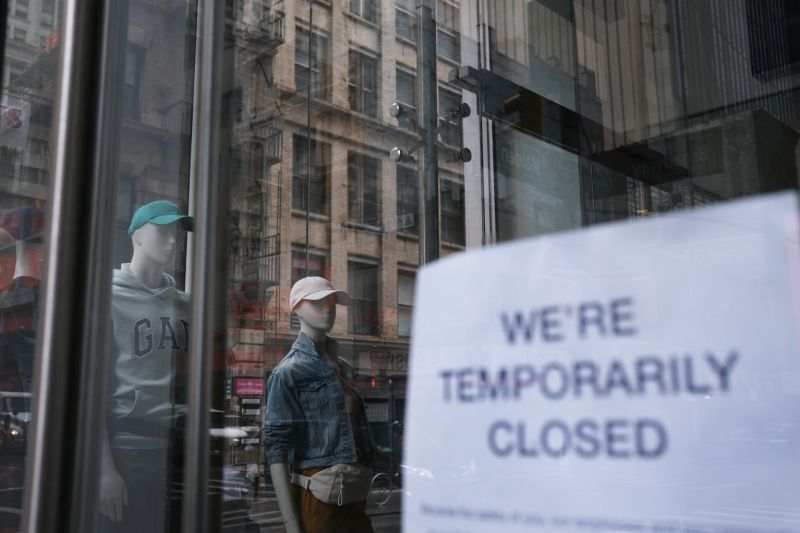
U.S. employers are expected to have slashed another eight million payrolls in May, adding to the record high of 20.5 million from the prior month. The payroll cuts during the coronavirus pandemic have far outpaced those during the global financial crisis, when non-farm payroll losses peaked at 800,000 in March 2009.
“We expect even more declines in employment across different industries than in the last two months,” UBS economist Seth Carpenter said in a note. “From March to April, leisure accounted for 40% of the decline in private employment despite constituting only 13% of private payrolls. In May, work-from-home industries probably continued to see slower layoffs than in the broader economy. General merchandise retail probably experienced faster layoffs as business closures picked up.”
In April, average hourly earnings jumped by a record 4.7% over the prior month, reflecting the disproportionate toll the pandemic has had on low-wage workers. That growth rate is expected to moderate in May over April, but accelerate over last year, again underscoring changes in the composition of the U.S. workforce due to the outbreak.
Still, ahead of the May jobs report, some other surveys showed encouraging drops in new job cuts relative to April, offering some hope for a further easing in payroll declines in the BLS report. The closely watched ADP report on private payrolls released Wednesday showed private employers cut 2.76 million jobs in May, or less than one-third the 9 million expected, and just a fraction of the 19.6 million from April. Economists expect the Labor Department report will show private payrolls dropped by 7.25 million in May.
Reprinted from Yahoo Finance, the copyright all reserved by the original author.
แก้ไขเมื่อ 05 Jun 2020, 10:40
คำชี้แจง (Disclaimer) : เนื้อหาข้างต้นเป็นเพียงมุมมองของผู้เขียนแต่เพียงผู้เดียว และไม่ได้แสดงหรือสะท้อนถึงจุดยืนอย่างเป็นทางการของ Followme แต่อย่างใด Followme ไม่รับผิดชอบต่อความถูกต้อง ความครบถ้วน หรือความน่าเชื่อถือของข้อมูลที่ปรากฏ และจะไม่รับผิดชอบต่อการดำเนินการใด ๆ ที่เกิดขึ้นจากเนื้อหานั้น เว้นแต่จะมีการระบุไว้เป็นลายลักษณ์อักษรอย่างชัดเจน

เขียนข้อความของคุณตอนนี้