


$50 Free Margin Account Campaign:
https://www.nooralmal.com/cc19...
EURUSD
The EUR/USD pair soared this Thursday, and traded as high as 1.1917 in the aftermath of the ECB monetary policy announcement, as the central bank was as “hawkish” it could be within a pandemic context. As widely anticipated, the current monetary policy was left unchanged. There were modest revisions to growth and inflation figures for this year and the next ones, although the hot spot was the exchange range, as policymakers said that, while they are watching it, they don’t intend to start a war over it, somehow suggesting they won’t intervene.
And while recognizing the persistent uncertainty, Lagarde started her speech mentioning a strong rebound in macroeconomic activity, although noting that it’s still below pre-pandemic levels and adding that ample accommodative support is needed. The US, on the other hand, published Initial Jobless Claims for the week ended September 4, which came in at 884K, worse than anticipated. The country also released August PPI which beat expectations but remained in the red at -0.2% YoY. This Friday, Germany and the US will publish their respective final August inflation figures.
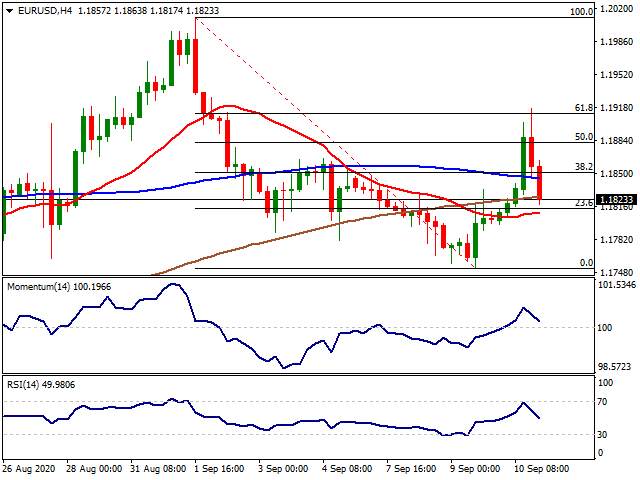
The EUR/USD pair eased from the mentioned high to settle around 1.1820, trimming most of its intraday gains. The pair has topped for the day around the 61.8% of its latest daily slide from the year high at 1.1910, now trading below the 38.2% retracement of the same slide providing resistance at 1.1850. In the 4-hour chart, the pair is trading above all of its moving averages, while technical indicators retreated from daily highs, but stabilized within positive levels. Overall, the bearish scope seems limited at the time being, yet the pair would need to overcome the daily high to have room to extend its advance towards the 1.2000 region.
Support levels: 1.1810 1.1760 1.1725
Resistance levels: 1.1850 1.1910 1.1950
USDJPY
The USD/JPY pair has remained indifferent to European headlines, confined to a tight range ever since the day started and trading not far from where it left on Wednesday. The pair has been unable to attract investors pretty much since the month started, hovering around 106.00 ever since. The pair advanced despite the poor performance of equities, as US indexes resumed their slumps, weighed by news that the US Congress has been unable to move on with the coronavirus aid package. US Treasury yields, in the meantime, ticked marginally lower daily basis.
Japan published July Machinery Orders at the beginning of the day, which improved from -7.6% in the previous month to 6.3%, beating expectations. When compared to a year earlier, orders were down 16.2%, also better than the -18.3% forecast. This Friday, the country will release August PPI and the BSI Large Manufacturing Conditions Index, foreseen at -44.2 in Q3 from -52.3 previously.
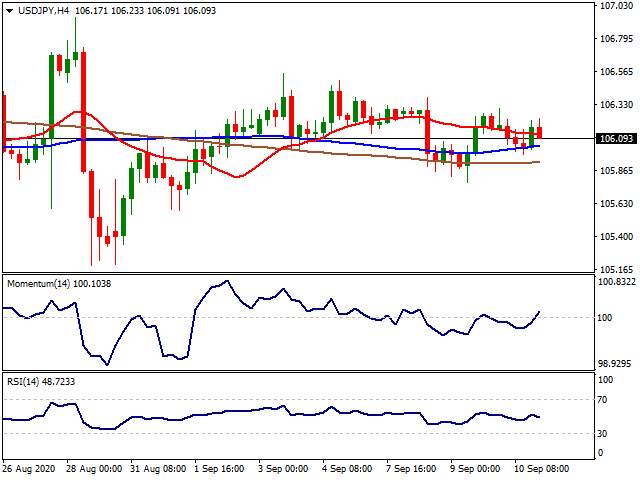
The USD/JPY pair is technically neutral, without signs it will come back to life anytime soon. In the 4-hour chart, it´s hovering around converging and directionless moving averages, as technical indicators remain around their midlines. As said on preview updates, the pair would need to firm up above 106.70 or to fall below 105.50 to gain directional strength.
Support levels: 105.90 105.50 105.10
Resistance levels: 106.35 106.70 107.10
GBPUSD
The GBP/USD pair collapsed this Thursday to 1.2780, its lowest since last July, amid mounting tensions between the UK and the EU. Diplomats for both sides met for emergency talks after PM Boris Johnson announced plans to override parts of the Withdrawal Agreement. Following the discussion, the European Commission said that if the UK adopts the Internal Markets Bill, it would constitute an extremely serious violation of the Withdrawal Agreement and of international law. Even further, they stated that the UK has “seriously damaged trust” and threatened with “legal remedies” to address violations of the legal obligations contained in the text and, if the bill is not amended before month-end. Renewed dollar’s demand during US trading hours, further hurt the Sterling.
Friday will be quite a busy day in the UK, not only due to Brexit developments but also as the country will release several relevant reports. The kingdom will unveil its July Total Trade Balance, which posted in June a surplus of £5.3 B. It will also publish Industrial Production and Manufacturing Production for the same month, seen posting moderate advances. Later in the day, the BOE will publish Consumer Inflation Expectations, while NIESR will release the GDP estimate for the three months to August.
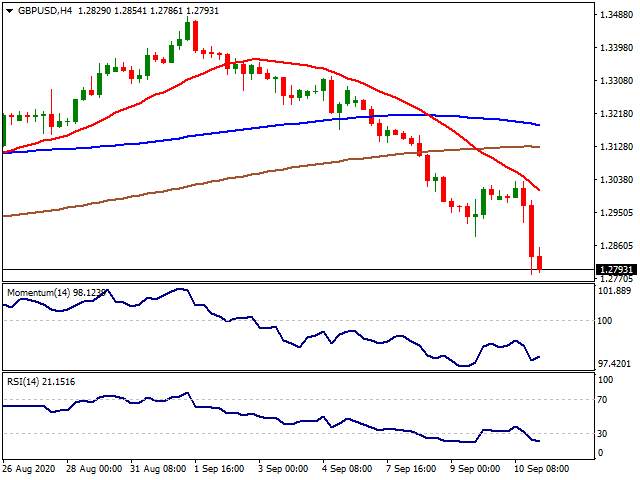
The GBP/USD pair has bounced from the mentioned low, anyway trading below the 1.2800 level. Despite being extremely oversold, chances of further recoveries are quite limited. The 4-hour chart shows that the pair met sellers around a firmly bearish 20 SMA, which currently stands at around 1.3015, accelerating below the larger ones. Technical indicators, in the meantime, have pared their declines, yet the RSI barely turned flat around 23, indicating no buying interest around the pair.
Support levels: 1.2780 1.2740 1.2695
Resistance levels: 1.2850 1.2890 1.2930
AUDUSD
The AUD/USD pair is ending the day as it started it, trading in the 0.7260 price zone. It earlier picked at 0.7324 on the post-ECB enthusiasm weighing on the American dollar but turned south in the last trading session of the day, weighed by the sour tone of Wall Street. Equities capitulated following news that the US Congress was once again unable to pass a coronavirus relief package.
In the data front, Australia published September Consumer Inflation Expectations, which came in at 3.1%, below the previous 3.3%. The country won’t release macroeconomic data this Friday.
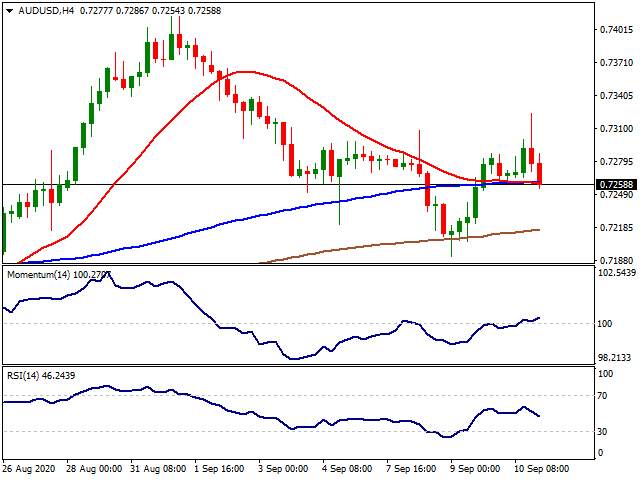
The AUD/USD pair holds on to its short-term neutral stance. The 4-hour chart shows that it’s holding a few pips above its 20 and 100 SMA, both directionless and converging around 0.7260. The Momentum indicator advances above its midline, while the RSI already turned south and crossed into negative territory. Overall, the risk is skewed to the downside, although the pair would need to break below 0.7215 to confirm a steeper decline.
Support levels: 0.7215 0.7170 0.7130
Resistance levels: 0.7310 0.7350 0.7385
GOLD
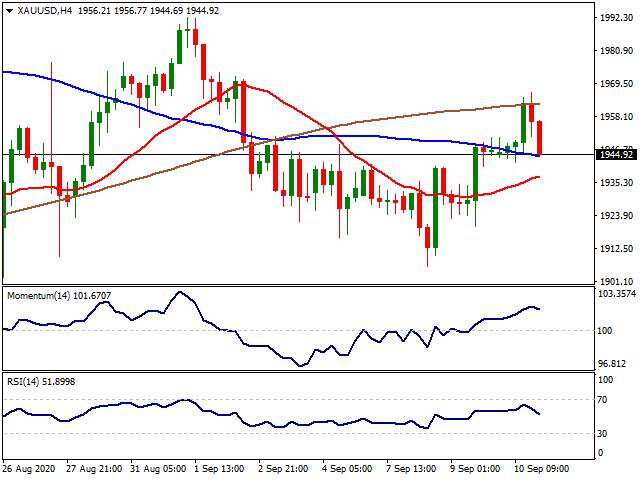
Gold peaked on Thursday at $1,966 the highest intraday level in a week when the European Central Bank (ECB) was holding its press conference, at the worst moment of the U.S. dollar. During the second half of the American session, the greenback recovered ground and bounced, erasing all gains. The metal pulled back under $1,950. Risk aversion capped the upside in the yellow metal that continues to move sideways, like Treasury yields. Market sentiment weakened amid a decline in equity prices in Wall Street and on the back of rising tensions between the U.K. and the E.U. regarding the Brexit treaty.
Technically, gold continues to consolidate. It is moving sideways, unable to move away from the $1,950 area. On Thursday it jumped to $1,966 but quickly pulled back, suggesting a lack of strength to resume the upside. On Tuesday, it was the contrary; it bottomed at $1,905 only to rebound quickly. Risks appear to be balanced. A break below $1,900 would likely lead to more losses, exposing the August low at $1,860.
Support Levels: $1,935 $1,905 $1,860
Resistance Levels: $1,978 $2,015 $2,040
SILVER
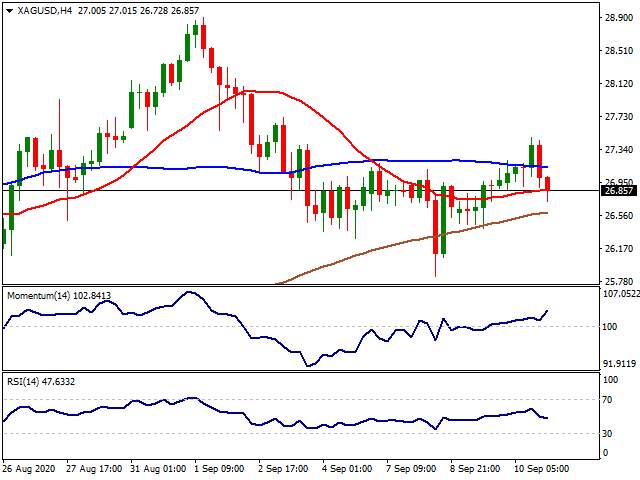
As usual, silver prices followed the lead of gold this Thursday. Precious metals managed to advance following an optimistic ECB monetary policy announcement, but later gave up to renewed dollar’s demand, triggered by mounting risk-off. The dollar moved inversely to equities during US trading hours, gaining on Wall Street’s setback. The white metal has remained quite stable this week, with intraday swings depending exclusively on the dollar’s demand, or absence of it.
From a technical point of view, silver is neutral, trading a few cents below $27.00 an ounce. In the 4-hour chart, the price is trapped within directionless moving averages, after a failed bullish breakout. Technical indicators, in the meantime, diverge from each other, but both stand within neutral levels. Opposite to gold, the white metal seems to have better chances of extending its advance, mainly if it surges past 27.17, the daily high.
Support levels: 26.70 26.55 26.30
Resistance levels: 27.00 27.20 27.45
CRUDE WTI
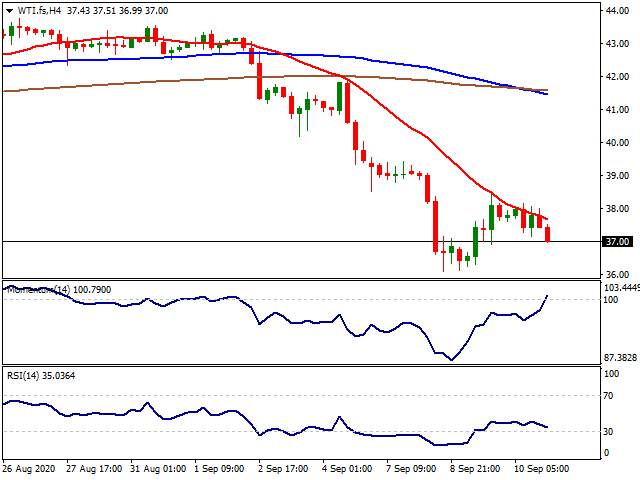
After Wednesday’s rebound, crude oil prices dropped on Thursday but holding above weekly lows. WTI lost more than 2.5% affected by a late recovery of the U.S. dollar, amid a decline in U.S. stock indexes and inventory data. From the level it had a week ago, WTI is down 10%. The price traded momentarily above $38.00, but inventory data limited the upside. The Energy Information Administration informed U.S. crude inventories rose by 2.03 million barrels during the week ended last Friday, against expectations of a 1.33 million decline.
Technically, WTI still looks under pressure. The rebound was short-lived and capped by the $38.00 area. A firm break above $38.20 could alleviate the pressure, but the correction still appears to have more legs to go while price remains under the 20-day moving average, at $41.50. A test of the weekly low near $36.00 looks possible; below, support levels might be seen at $35.40 and $34.80 before the June low at $34.25.
Support Levels: $36.05 $35.40 $34.80
Resistance Levels: $37.60 $38.50 $39.50
DOW JONES
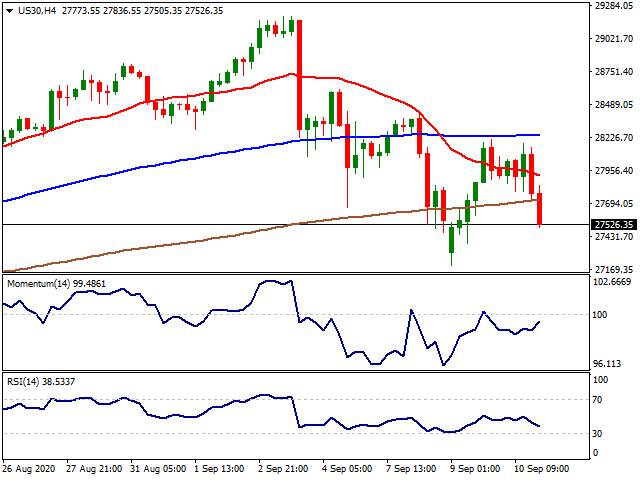
US markets pulled back on Thursday, trimming Wednesday’s gains. The Dow Jones fell more than 350 points, unable to keep the 28,000 level. The Nasdaq lost 1.90%. Economic data from the U.S. was mixed. Jobless claims came in above expectations: initial claims held at 884K (market consensus: 848K), continuing claims at 13.385M (12.929M). U.S. producer prices rose above expectations in August, with the PPI up 0.3% (0.2%). Market participants mostly ignored economic numbers. The European Central Bank kept rates unchanged as expected and presented upbeat economic forecasts. Equities across the world peaked during Lagarde’s press conference but then pulled back with more impulse. The escalation in tensions between the U.K. and the E.U. weighed on market sentiment.
From a technical perspective, the DJIA ended looking from the upside to the 27,500 area. A close below would be a negative sign, adding more pressure on the downside. The next support stands at the 27,000 level, followed by the strong barrier at 26,400. On the upside, the DJIA failed again to hold above 28,000: if it manages to so, it could climb further to test the next resistance at 28,400.
Support Levels: 27,400 26,600 26,000
Resistance Levels: 28,050 28,400 28,750
MACROECONOMIC EVENTS
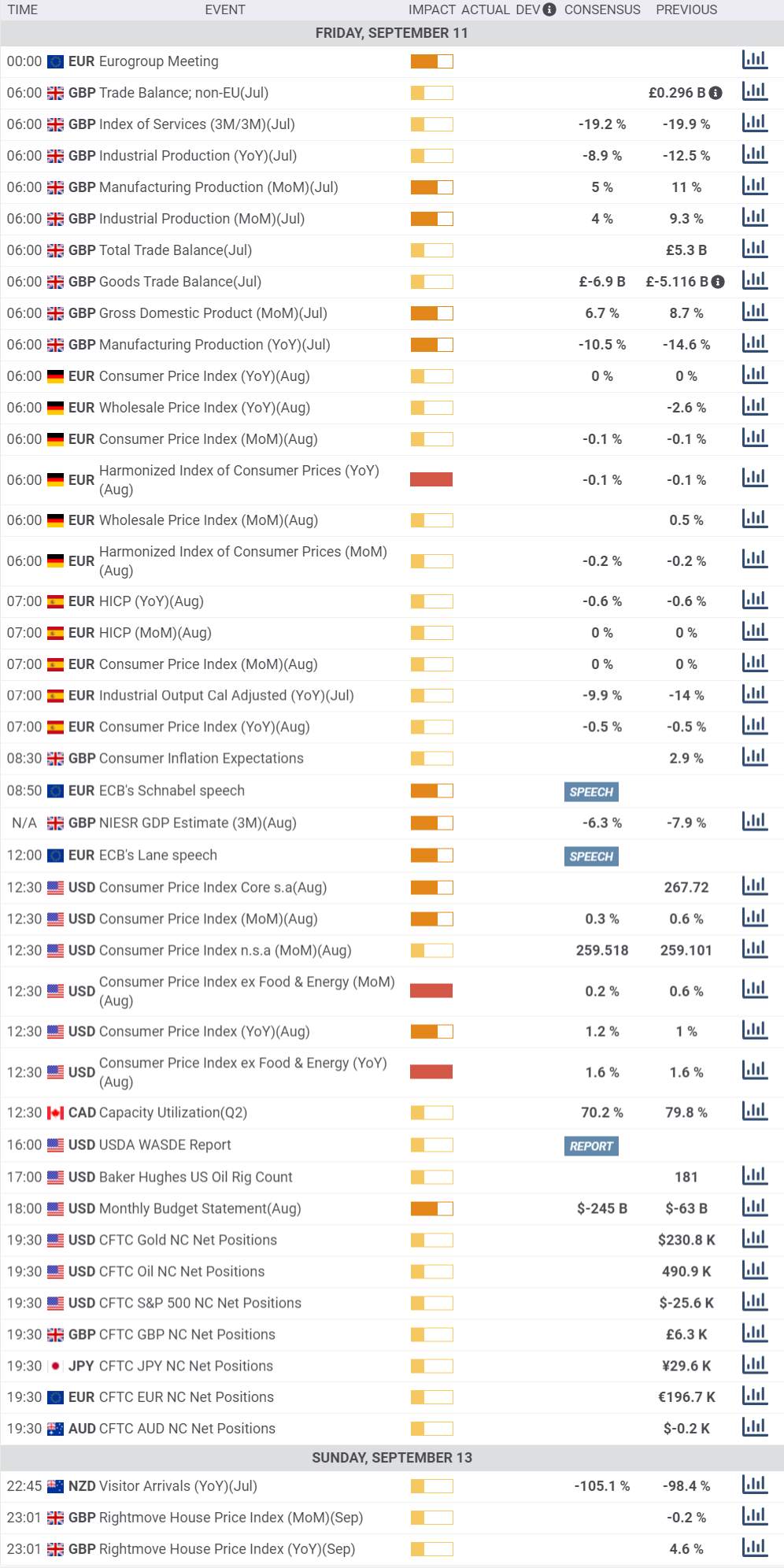
* All the Moving Average support and resistance levels are dynamic by nature. Means when the price approaches the Moving averages, slight variation occurs in the forecasted Moving Average support and resistance levels. Previous few days’ intraday levels are also signicant while trading the current day as the price tend to hover around these levels for some time. Levels in red indicate strong, critical or vital.
Please remember that trading financial markets carry a high degree of risk to your capital. It is possible to lose more than your initial stake. Leveraged products may not be suitable for all investors, therefore please ensure you fully understand the risks involved and seek independent advice if necessary.
All Rights Reserved © Noor Al Mal
#欧央行决议按兵不动##无协议脱欧风险又来##美股狂飙要到头了吗##8月非农持续向好##全球央行年会#
คำชี้แจง (Disclaimer) : เนื้อหาข้างต้นเป็นเพียงมุมมองของผู้เขียนแต่เพียงผู้เดียว และไม่ได้แสดงหรือสะท้อนถึงจุดยืนอย่างเป็นทางการของ Followme แต่อย่างใด Followme ไม่รับผิดชอบต่อความถูกต้อง ความครบถ้วน หรือความน่าเชื่อถือของข้อมูลที่ปรากฏ และจะไม่รับผิดชอบต่อการดำเนินการใด ๆ ที่เกิดขึ้นจากเนื้อหานั้น เว้นแต่จะมีการระบุไว้เป็นลายลักษณ์อักษรอย่างชัดเจน

เขียนข้อความของคุณตอนนี้