


NCM Investment - The Festival of GOLD
OPEN ACCOUNT AND GET A CHANCE TO WIN GOLD
For more details: https://www.nooralmal.com/gold...
Official Website: https://www.nooralmal.com/
EURUSD
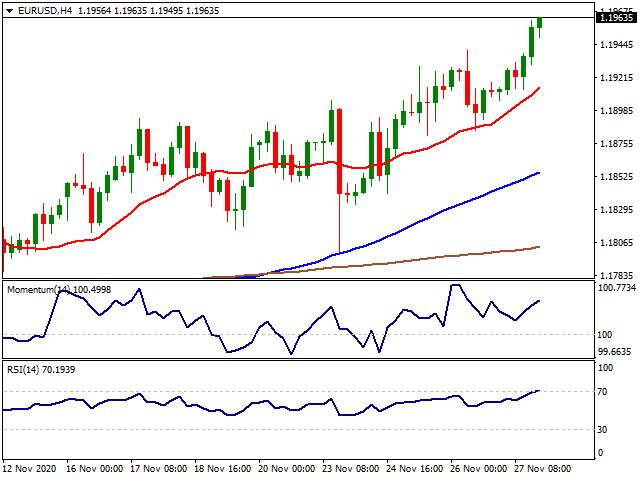
The EUR/USD pair hit 1.1963 last Friday, its highest since September 1, when the pair reached 1.2011, the year’s high. The greenback remained under selling pressure in thinned holiday trading, while the shared currency found support on upbeat EU data, as the November Economic Sentiment Indicator printed at 87.6, better than the 86.5 expected. Equities closed in the green, reflecting a generally positive market’s mood.
This Monday, Germany will present the preliminary estimates of November inflation data, seen contTacting by 0.7% MoM and down 0.2% when compared to a year earlier. The US will publish October Pending Home Sales and minor regional business indexes.
The daily chart for the EUR/USD pair supports a bullish continuation, as the pair is comfortable above bullish moving averages. Technical indicators remain within positive levels, although the Momentum indicator has a limited upward strength while the RSI maintains its bullish slope near overbought readings. In the near-term, the risk is also skewed to the upside, as the pair accelerated north above a firmly bullish 20 SMA, which develops above the longer ones. The Momentum indicator is neutral within positive levels, while the RSI reached overbought readings, without signs of bullish exhaustion.
Support levels: 1.1920 1.1880 1.1840
Resistance levels: 1.2010 1.2050 1.2090
USDJPY
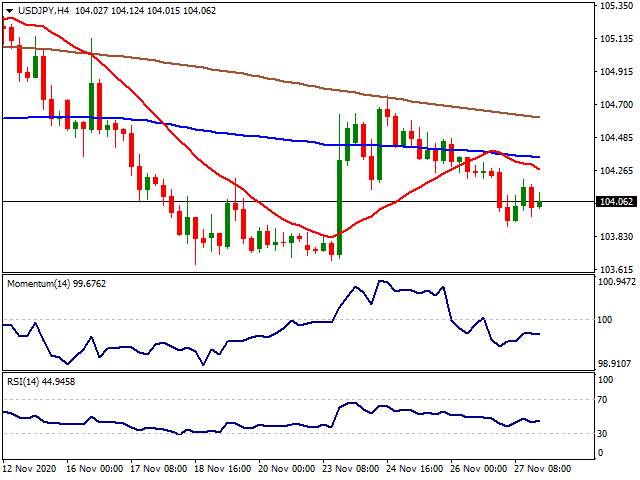
The USD/JPY eased on Friday to finish the week with modest gains a few pips above the 104.00 figure. The slide came as a result of the broad dollar’s weakness, limited by the positive tone of global equities, as all major indexes managed to post daily gains on Friday. Meanwhile, US Treasury yields fell on Friday, adding pressure on the pair.
Japan published November Tokyo inflation figures, which came in worse than anticipated. The annual CPI contracted to -0.7%, while the core annual inflation came in at -0.2%. Early on Monday, Japan will publish the preliminary estimate of October Industrial Production, foreseen falling by 14.5% YoY, and October Retail Trade, expected to have contracted by 7.7% YoY.
The USD/JPY pair is bearish according to technical readings in the daily chart, which shows that it fell further below a bearish 20 SMA. Technical indicators in the mentioned time-frame maintain their strong bearish slopes within negative levels. The 4-hour chart also favors a bearish continuation, as the pair is developing below all of its moving averages, while technical indicators consolidate below their midlines.
Support levels: 103.90 103.50 103.15
Resistance levels: 104.65 105.00 105.40
GBPUSD
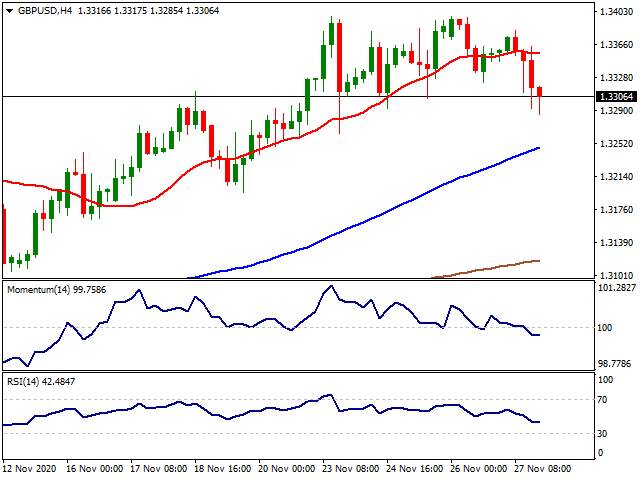
The GBP/USD pair closed the week with modest gains around the 1.3000 level, down on Friday for a second consecutive day. The lack of progress in Brexit talks has hurt demand for sterling. On Friday, EU’s chief negotiator Michel Barnier traveled to London for in-person discussions, as the critical issues remain unsolved. The EU and the UK keep playing the blame game, accusing each other of not conceding on key issues. UK PM Boris Johnson stated that Britain would do great with or without a trade deal with the Union.
Brexit woes will continue to determine the pound’s direction. The UK calendar will include this Monday, October Consumer Credit and Mortgage Approvals.
The GBP/USD pair keeps losing bullish momentum but remains far from bearish. In the daily chart, the pair continues to develop above bullish moving averages, while technical indicators ease within positive levels. The 4-hour chart, on the other hand, shows a bearish stance, as the pair has extended its slump below a now flat 20 SMA, while technical indicators head south within negative levels. A steeper decline could be expected on a break below 1.3285, Friday’s intraday low.
Support levels: 1.3285 1.3240 1.3205
Resistance levels: 1.3320 1.3365 1.3410
AUDUSD
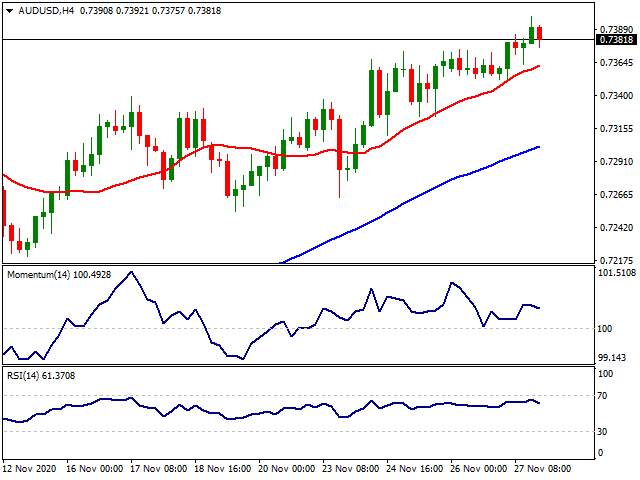
The AUD/USD pair advanced last week, reaching on Friday a daily high of 0.7398 and settling a handful of pips below this last. Gains, however, were modest, with the pair rather consolidating its latest gains this past week. The aussie benefited from the broad greenback’s weakness and the positive tone of equities. This last, rallied in relief, as US President Donald Trump allowed the transition with President-elected Joe Biden’s staff, clearing some of the uncertainty that hurts financial markets.
Australia will publish this Monday, November TD Securities Inflation, previously at 1.1% YoY. In the meantime, tensions between Beijing and Canberra continue. Over the weekend, Australia’s trade minister said China’s steps to curb imports of his country’s goods are “aggressive,” adding that such measures undermined confidence in the global economic recovery.
The AUD/USD pair retains its bullish stance, despite lacking momentum. The daily chart shows that the pair is above all of its moving averages, with the 20 SMA accelerating north above the longer ones. The Momentum indicator turned flat within positive levels amid limited intraday ranges this week, while the RSI holds near overbought levels. In the shorter-term, and according to the 4-hour chart, the risk is also skewed to the upside, with a bullish 20 SMA advancing above the longer ones and providing dynamic support. Technical indicators are stable above their midlines, with modest bearish slopes that are not enough to confirm an upcoming slide.
Support levels: 0.7330 0.7290 0.7250
Resistance levels: 0.7415 0.7450 0.7490
SILVER
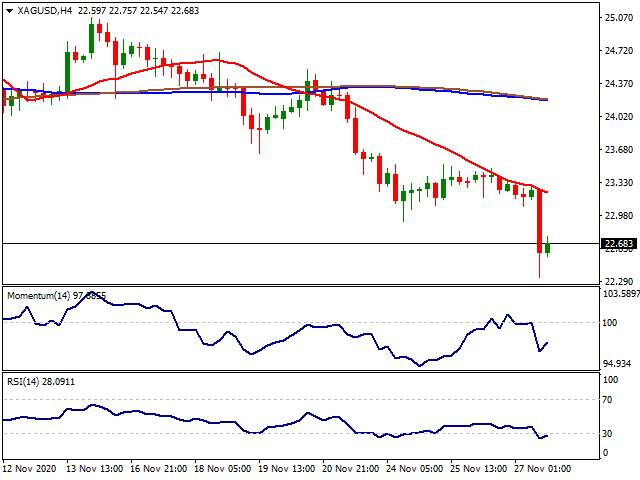
Silver also lost an important support level of $22.90 on Friday as precious metals continued to stay under pressure in the aftermath of the vaccine news. Lately, the volatility increased for the precious metals due to market optimism about the vaccines and the resolution of the US elections. Reflecting the volatility, Three of China’s major state-owned banks announced on Friday they will suspend the opening of new accounts for their precious metal investment products from Saturday amid increased volatility in global and domestic precious metal prices. At this point, the money flow is through the equity markets as traders are willing to end the year with gains. On the other hand, the pandemic reality is still intact and markets are still waiting for the second stimulus deal after Biden takes over the White House. Therefore, any disruption in the vaccine news might support precious metals in the long run.
Below the $22.90 level ($11.63-$29.86 38.20%), the supports can be followed at $20.75 ($11.63-$29.86 50.00%) and $18.42 ($11.63-$29.86 61.80%). Over the $22.90 level, the targets up can be followed at $25.21 ($11.63-$29.86 23.60%), $26.00 (August-September support), $27.00 and $28.00 levels.
Support Levels: $22.90 $20.75 $18.42
Resistance Levels: $25.21 $26.00 $27.00
CRUDE WTI
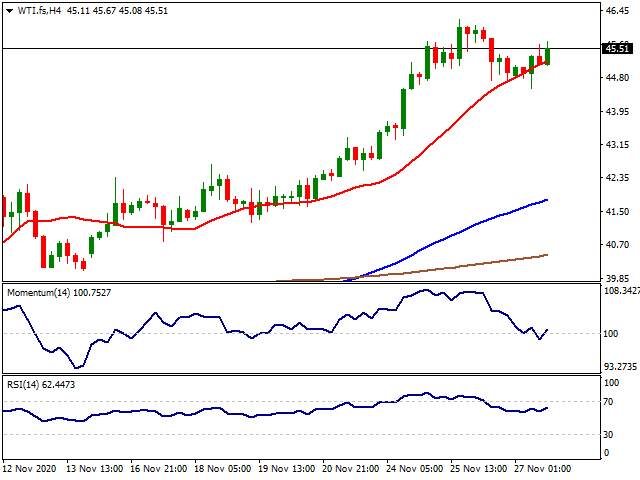
After the impressive rally that started in mid-November, WTI managed to continue its winning trade on Friday after giving back some portions of its gains on Thursday. On Friday, news hit the wires about the assassination of lead Iranian nuclear scientist. Mohsen Fakhrizadeh had been assassinated near the capital city of Tehran. Fakhrizadeh has long been suspected as being behind a secret Iranian nuclear programme, with one Western diplomat saying to Reuters back in 2014 that if Iran were to create a nuclear bomb, Fakhrizadeh would be its “father”. Any escalation in the region might put oil supply at risk in the short-term. However, oil prices did not seem to be interfered by the event so far. All eyes will be on OPEC+ meeting this week. The OPEC+ cartel of major oil producers will be meeting over the weekend and into Monday, from which a three-month extension of current production cuts through Q1 2021 is now the base case expectation. If the cartel fails to extend output cuts, this could trigger significant downside in WTI.
Next supports can be seen at 45.00$, 43.88$ and 43.00$ respectively while the resistances can be followed at 47.00$ and 48.50$.
Support Levels: 45.00$ 43.88$ 43.00$
Resistance Levels: 46.00$ 47.00$ 48.50$
DOW JONES
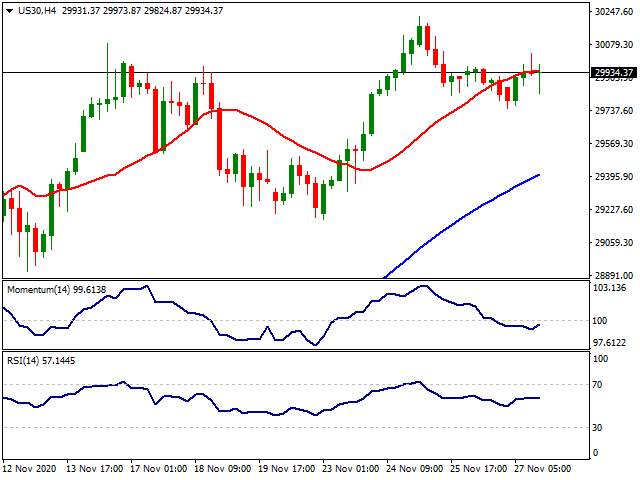
Dow Jones had an uneventful trading session on Friday after the Thanksgiving holiday. The index tested 30,000 level and ended the week a tick below the record-high zone. The USD index stayed under pressure and slipped sub-92.00 levels while the US 10-year yield slipped to 0.84% level. At this point without extra catalyst, markets might try to digest the positive risk appetite and technical year-end trading schema might be intact for the rest of the year.
This week will be critical in terms of US data sets. On Tuesday, FOMC Chairman Jerome Powell will be testifying before Congress and investors will look for fresh clues regarding possible adjustments to the asset purchase program in the light of better than expected US data readings. Also, ISM Manufacturing PMI (Nov) data will be followed in the US on Tuesday. On Wednesday, the US ADP Employment Change (Nov) will be followed before the ISM Services PMI (Nov) and Initial Jobless Claims (Nov 27) data on Thursday. Finally, on Friday, the US NFP data with other labour market readings will be followed.
From the technical point of view, if the index stays over 29,000, 29,500 and 30,000 levels can be followed as new targets high while below the 28,400 level, 28,000 and 27,770 can be followed as supports.
Support Levels: 28,400 28,000 27,770
Resistance Levels: 29,500 30,000 30,500
XAUAUA
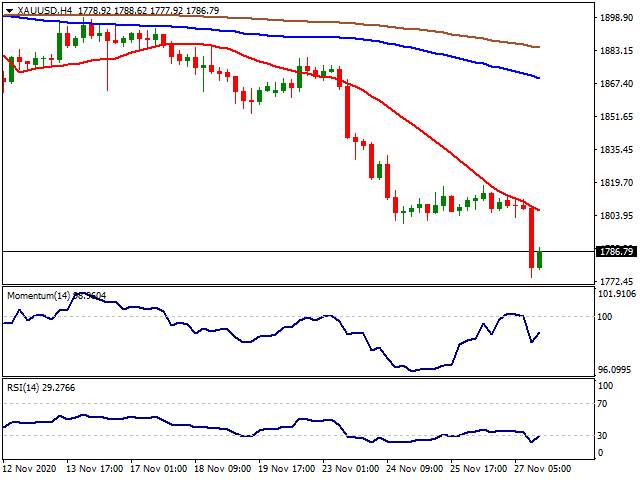
Despite the decline in the USD index DXY continued, Gold also broke its physiological support at $1,800 and tested its lowest level since the beginning of July. Apart from the vaccine news, there was no other significant catalyst behind the move which pushed Gold further down. Better than expected US macro-data might lift the pressure on the stimulus package but in that case, the USD should find support too. But in this case, both the greenback and precious metals are losing ground. On the other hand, money keeps flowing into the US indexes as year-end price action is intact.
The week ahead will kick-off with the Chinese manufacturing data set early on Monday. On Tuesday, FOMC Chairman Jerome Powell will be testifying before Congress and investors will look for fresh clues regarding possible adjustments to the asset purchase program. Also, ISM Manufacturing PMI (Nov) data will be followed in the US on Tuesday. On Wednesday, the US ADP Employment Change (Nov) will be followed before the ISM Services PMI (Nov) and Initial Jobless Claims (Nov 27) data on Thursday. Finally, on Friday, the US NFP data with other labour market readings will be followed.
From the technical point of view, below the $1,860 level, the supports can be followed at $1,800, $1,763 ($1,451-$2,075 61.80%) and $1,700 levels. Over the $1,860 level, the resistances can be followed at $1,900 with $1,956 ($1,451-$2,075 38.20%) and $2,000 levels.
Support Levels: $1,800 $1,763 $1,700
Resistance Levels: $1,900 $1,956 $2,000
MACROECONOMIC EVENTS
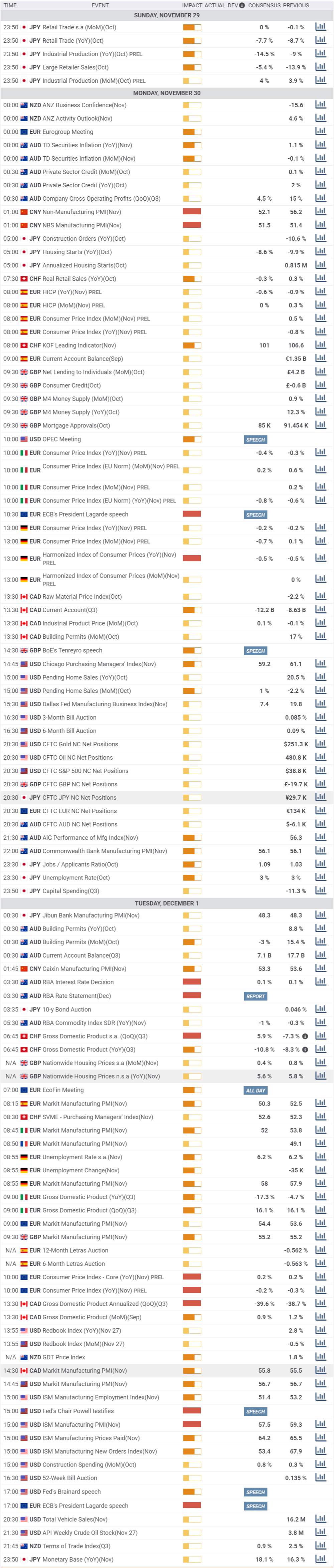
* All the Moving Average support and resistance levels are dynamic by nature. Means when the price approaches the Moving averages, slight variation occurs in the forecasted Moving Average support and resistance levels. Previous few days’ intraday levels are also signicant while trading the current day as the price tend to hover around these levels for some time. Levels in red indicate strong, critical or vital.
Please remember that trading financial markets carry a high degree of risk to your capital. It is possible to lose more than your initial stake. Leveraged products may not be suitable for all investors, therefore please ensure you fully understand the risks involved and seek independent advice if necessary.
All Rights Reserved © Noor Al Mal
แก้ไขเมื่อ 30 Nov 2020, 10:55
คำชี้แจง (Disclaimer) : เนื้อหาข้างต้นเป็นเพียงมุมมองของผู้เขียนแต่เพียงผู้เดียว และไม่ได้แสดงหรือสะท้อนถึงจุดยืนอย่างเป็นทางการของ Followme แต่อย่างใด Followme ไม่รับผิดชอบต่อความถูกต้อง ความครบถ้วน หรือความน่าเชื่อถือของข้อมูลที่ปรากฏ และจะไม่รับผิดชอบต่อการดำเนินการใด ๆ ที่เกิดขึ้นจากเนื้อหานั้น เว้นแต่จะมีการระบุไว้เป็นลายลักษณ์อักษรอย่างชัดเจน

เขียนข้อความของคุณตอนนี้