



It’s entirely possible to trade profitably using just our eyes, charts, and grey matter as “hunting” for setups can cause more pain than gain. In this article, we will go through some high probability price patterns.
The Complexity Trap
Complexity can creep into your thought patterns and trading habits in the subtlest ways. Picture this: someone has told you that the way to make money in the markets is to play trends. So you start with that belief, and you want to trade trends.
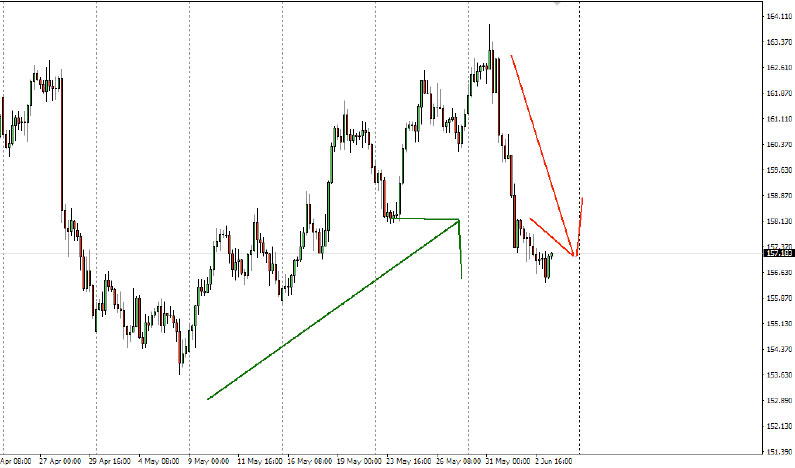
GBPJPY 4H Chart – Pepperstone MT4
Here is a potentially dangerous train of thought that many aspiring traders display in the attempt to build some kind of structure around market movement:
- How can I trade trends profitably?
- I can draw trend lines and play bounces off of them.
- Trend lines are quite discretionary – playing bounces off a moving average could be better?
- But which moving average? 5? 10? 20? 50? 100? And should it be simple? Exponential? Maybe something else?
- Or maybe a super trend is something even better? After all, it has “trend” in its name.
Of course, every single thought listed above can be a potential setback as it can lead to endless optimisation and trial/error with the end effect of never making any progress.
So the chart of this aspiring trader starts to become something like this:
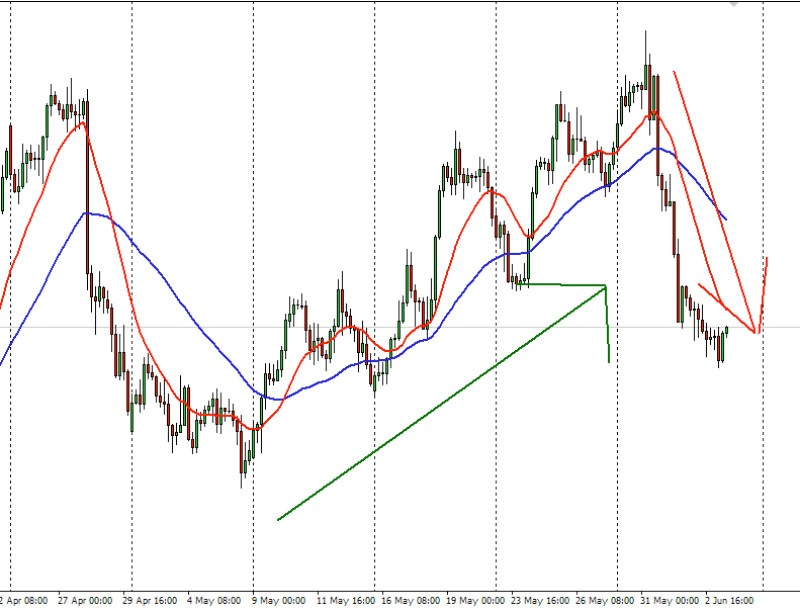
GBPJPY 4H – Pepperstone MT4
Let’s imagine the trader passes the first step and opts for a combination of moving averages. Attention naturally flows to the transition areas that usually confuse moving average traders in the first place.
- When will the average hold?
- When will it not hold?
- Can I overlay some other indicator to help me identify potential false breaks?
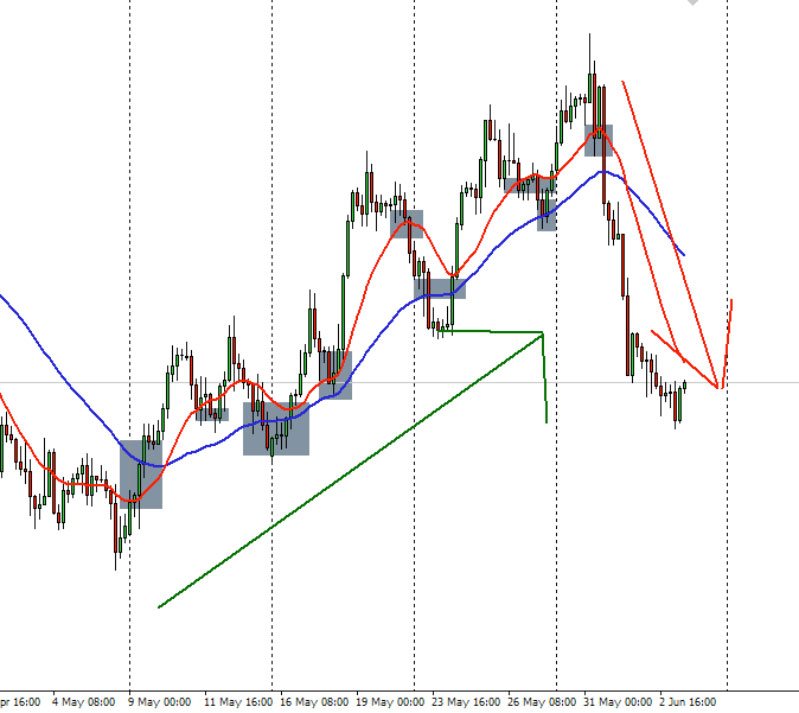
GBPJPY 4H Chart – Pepperstone MT4
Once again, the trader can be lured into endless permutations and trials that ultimately impede headway. So the trader eventually gives up trying to call proper and false breaks:
- Maybe my issue is with my money management
- I can attempt to pyramid off a moving average when it holds
- I might still get stopped out when the average fails
- Maybe I need a wider stop?
- That might diminish my R:R
- However, I’ll have a higher win%
The story can go on and on and on…
How to Simplify Your Decision Making
The key to keeping your trading approach simple yet subtle enough to keep you on the right side of the market is to ask yourself the correct questions when approaching the building phase. Here are some of the (wrong) questions and considerations which encourage complexity:
- How do I get the entry right?
- How can I qualify what a good setup looks like?
- How can I pick the perfect asset/moment/etc?
- I’m going to test/tweak/study what I do over & over again trying to weed out imperfections or work around past losses.
Instead, here are some questions and considerations that breed simplicity and deep understanding:
- Does this approach make sense?
- Is it logical?
- Why does it work?
- Can I strip it down and make it even more basic?
These questions lead to the discovery of principles. If you can uncover the principles behind what you do and why it works, you will not even necessarily need to back-test your method. You will simply need to wait for situations where the conditions are met going into the future.
What is the difference between a person tweaking/studying a method in the right way, and a person tweaking/studying the same method in the wrong way? The difference is in what they’re looking for, i.e. the analysis that’s happening.
Remember, it’s important to “wait for setups” and not “look for setups”. In the same way, if you go back to the drawing board asking the wrong questions and conducting the wrong analysis…
- “how can I avoid the loss?”
- “how can I get a better entry?”
…Then you are drawing complexity and difficulty towards you. You want to be asking the questions we discussed above – is it logical, and does it work? Why, and can it be any simpler? This leads you towards the essence of what you do. It will allow you to understand what you’re attempting to achieve better, and your mind will give you functional, flexible answers.
The proof is in the pudding
Let’s apply these correct questions to the example from above: you want to trade trends. How can we structure a simple, subtle and logical method using the right questions?
a) You want to trade trends → what is a trend?
It will require studying and exploring useful resources in an attempt to decipher the principles behind trends. But the studying will lead you to an understanding of the nature of trends. It is beyond the scope of this article but here are the starting points for this investigation.
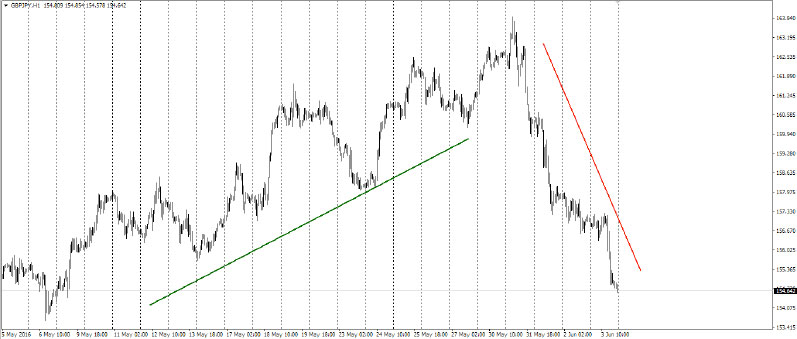
If price is moving evidently from the bottom left to the top right of your screen → uptrend If price is moving evidently from the top left to the bottom right of your screen → downtrend Source: Pepperstone MT4
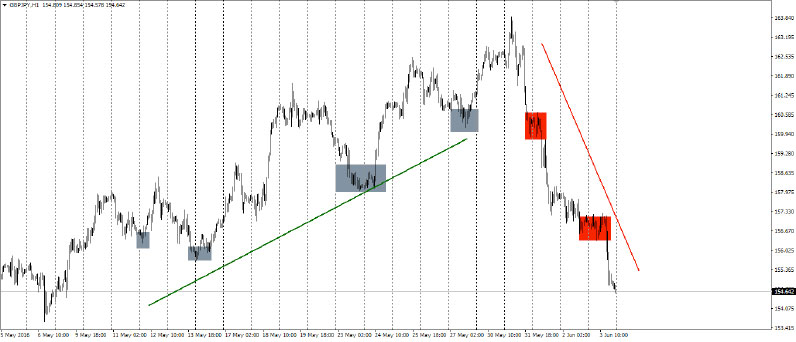
Evident Retracement/Swing lows being higher each time, and peaks being higher → uptrend Evident Retracement/Swing lows being lower each time, and peaks being lower → downtrend Source: Pepperstone MT4
คำชี้แจง (Disclaimer) : เนื้อหาข้างต้นเป็นเพียงมุมมองของผู้เขียนแต่เพียงผู้เดียว และไม่ได้แสดงหรือสะท้อนถึงจุดยืนอย่างเป็นทางการของ Followme แต่อย่างใด Followme ไม่รับผิดชอบต่อความถูกต้อง ความครบถ้วน หรือความน่าเชื่อถือของข้อมูลที่ปรากฏ และจะไม่รับผิดชอบต่อการดำเนินการใด ๆ ที่เกิดขึ้นจากเนื้อหานั้น เว้นแต่จะมีการระบุไว้เป็นลายลักษณ์อักษรอย่างชัดเจน

