


LEGENDS TRADING ICONS COMMODITIES
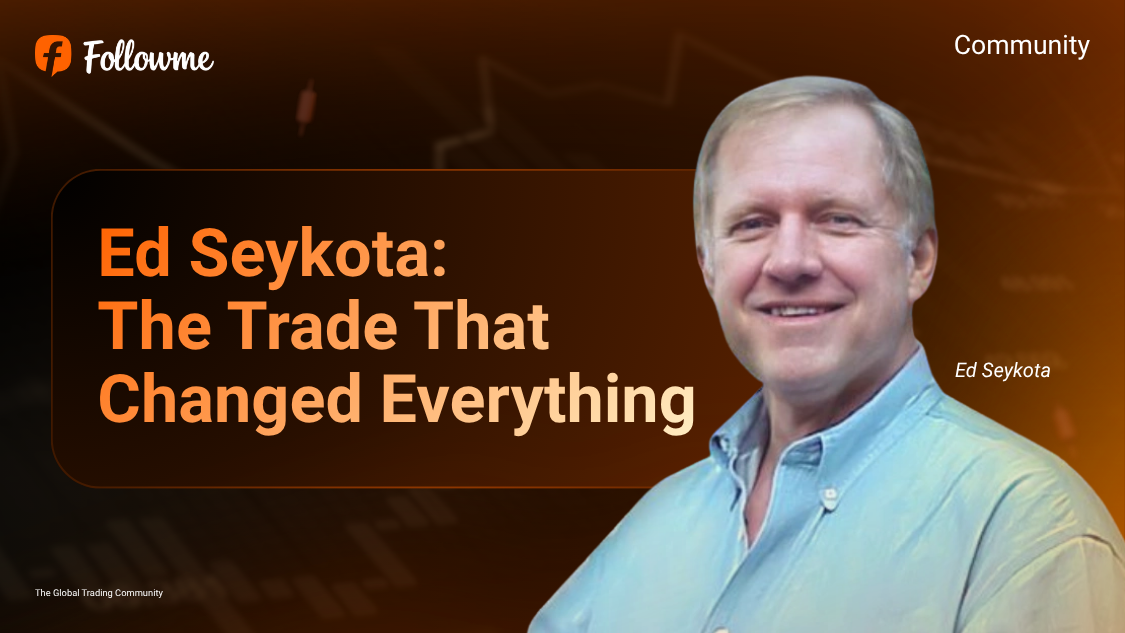
Ed Seykota: The Trade That Changed Everything
Followme Legends Desk | July 3, 2026
Nobody Took Him Seriously
It was in the early 1970s. Wall Street ran on relationships, phone calls, and gut feel. Technical trading was something serious people didn't talk about at dinner.
Ed Seykota was in his mid-twenties, managing a client account with $5,000 in it, and quietly building something nobody had tried before a computerised system that would trade the markets without him having to make a single discretionary call. His colleagues thought it was somewhere between eccentric and a waste of time, but he didn't care.
The 1970s Were on Fire and He Had a System for That
The early 1970s were a strange time for commodities. The U.S. had just dropped the gold standard. Inflation was picking up. Industrial metals were starting to move.
Seykota's system didn't need to understand why copper was going to trend. It just needed to see that it was. Price had been sitting in a tight range for a while, the kind of compressed, low-volatility coil that tends to precede a big directional move. When it broke out, volume confirmed it. Momentum was building.
Most traders would have found a reason to hesitate. Seykota's system didn't hesitate. That was the point.
How the System Actually Worked
The mechanics were straightforward, but the discipline behind them wasn't.
Seykota used moving average crossovers to identify trend directions when the short-term average crossed above the long-term average, the system entered. When it crossed back below, it exited. No judgment calls.
Position size was tied directly to volatility. If the market was moving more than usual, he sized down. If it was quiet, he sized up. The idea was simple: your risk should stay constant even when the market's behaviour doesn't. This was genuinely new thinking at the time.
Before any trade went on, the stop was set first. The stop defined how much of the account was at risk, and the position size was calculated backwards from there. Risk first, size second, entry third.
Once in, the system held as long as the trend held. That sounds easy but it isn't. Through the copper trade, there were multiple pullbacks that would have shaken almost any discretionary trader. Every dip felt like a potential reversal. The moving averages stayed aligned and the system stayed in.
What Happened
The $5,000 account grew to $15,000,000.
That's roughly 300,000% over twelve years during a period when the S&P 500 was going sideways and inflation was eating into most managed money returns.
It wasn't one lucky call. It was the same system, running the same rules, across dozens of trades. Copper was just the clearest example of what happened when you let a trend run without flinching.
Key Takeaways
| A system only works if you don't override it. The edge isn't in the signals. It's actually following them when everything in you is screaming not to. |
| Size for volatility, not conviction. A market moving 3% a day needs a smaller position than one moving 1% a day. Ignoring that is how traders end up at risk they didn't sign up for. |
| Stop first, size second, entry third. Reversing that order is how positions become unmanageable. |
| Pullbacks inside trends are noise. The hardest part of trend following is sitting through drawdowns that feel like reversals. Seykota removed the feeling from the equation. Price above the moving average, he held. If price moves below, he exits. |
A Question Worth Sitting With
Trend following fell out of fashion in the low-volatility, central-bank-driven markets of the 2010s. The signals were weaker, the drawdowns were longer. Many systematic funds are underperformed.
2022 happened. Rates moved, commodities trended. Currency markets broke out of ranges they'd been stuck in for years. The systematic trend following had one of its best years on record.
The system Seykota was running in the 1970s is still running today, inside some of the largest funds in the world.
The question isn't whether it works. It's whether you can follow it when it doesn't feel like it is.
Ready to Think Like a System?
Ed Seykota didn't win by being smarter than the market. He won by building a process and trusting it when everything else said not to.
Every week, we break down the trades, the systems, and the thinking behind the traders who got it right. Just the kind of analysis that holds up.
👉 Follow Followme and check out the Weekly Economic Calendar
July 3, 2026 | This article is for informational and educational purposes only and does not constitute financial advice. © 2026 Followme News




คำชี้แจง (Disclaimer) : เนื้อหาข้างต้นเป็นเพียงมุมมองของผู้เขียนแต่เพียงผู้เดียว และไม่ได้แสดงหรือสะท้อนถึงจุดยืนอย่างเป็นทางการของ Followme แต่อย่างใด Followme ไม่รับผิดชอบต่อความถูกต้อง ความครบถ้วน หรือความน่าเชื่อถือของข้อมูลที่ปรากฏ และจะไม่รับผิดชอบต่อการดำเนินการใด ๆ ที่เกิดขึ้นจากเนื้อหานั้น เว้นแต่จะมีการระบุไว้เป็นลายลักษณ์อักษรอย่างชัดเจน

-จบ-