
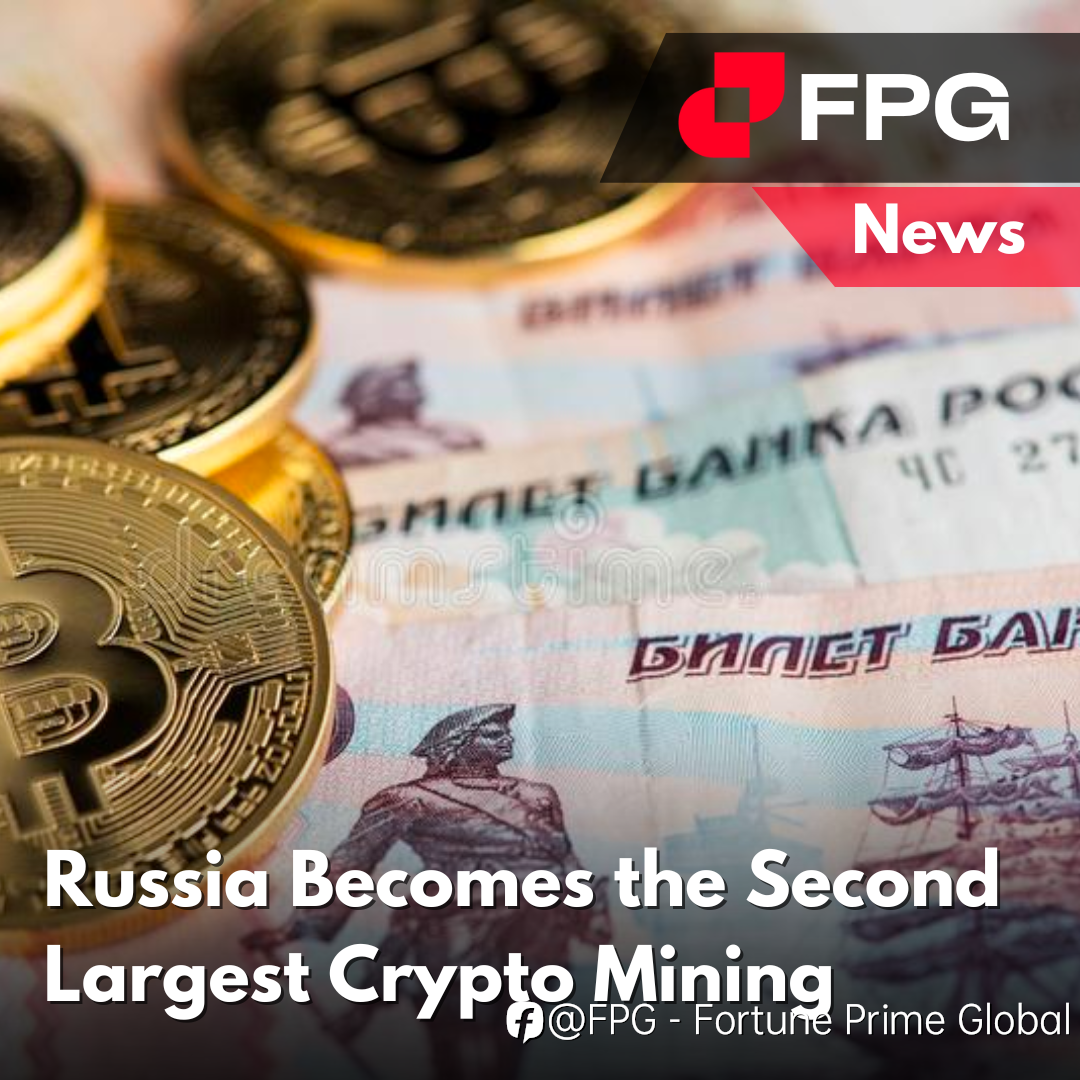
Bitcoin users in Russia have now jumped sharply and made this red bear country the second largest provider of crypto mining in the world after Kazakhstan. The surge came after President Vladimir Putin's government allowed its citizens to own cryptocurrency assets.
Even though the Russian Government does not allow its people to use digital assets as a means of payment for domestic goods and services, during the invasion, investors were allowed to use crypto assets as a means of cross-border transactions.
This reason has made the number of Bitcoin miners in Russia increase sharply over the past few months.Even as a result of the booming number of Bitcoin miners in Russia, the largest mining operator in Moscow, Bitriver noted that the amount of power spent during the creation of crypto coins from January to March 2023 swelled to 1 gigawatt (GW).
This number has increased 20 times when compared to the use of electricity needs over the last five years, to be precise, from 2017 to 2022.
The use of electricity consumption by crypto miners during the first quarter of 2023 in Russia has exceeded the electricity consumption of a number of other countries, such as the Gulf countries which use only 700 MW of electricity, or Canada with 400 MW and Malaysia 300 MW.
While Argentina 135 MW, then Iceland 120 MW, Paraguay 100-125 MW, Ireland 90 MW and finally Kazakhstan which only consumed 100 MW of electricity for the last three months.
Worried that the dominance of crypto assets could threaten the stability of the Russian ruble, now the Bank of Russia (Russia's central bank) is again voicing skepticism about cryptocurrencies.Through rules that directly prohibit the use of digital financial assets as a payment method in the country.To prevent the theft of electricity that is often carried out by rogue miners who are reluctant to pay taxes to the state.
คำชี้แจง (Disclaimer) : เนื้อหาข้างต้นเป็นเพียงมุมมองของผู้เขียนแต่เพียงผู้เดียว และไม่ได้แสดงหรือสะท้อนถึงจุดยืนอย่างเป็นทางการของ Followme แต่อย่างใด Followme ไม่รับผิดชอบต่อความถูกต้อง ความครบถ้วน หรือความน่าเชื่อถือของข้อมูลที่ปรากฏ และจะไม่รับผิดชอบต่อการดำเนินการใด ๆ ที่เกิดขึ้นจากเนื้อหานั้น เว้นแต่จะมีการระบุไว้เป็นลายลักษณ์อักษรอย่างชัดเจน